Friday, June 1, 2018

2018 Hurricane Season


After an unprecedented 2017 hurricane season where multiple storms devastated parts of the country, the Office of Emergency Management is encouraging residents and communities to begin preparing now!

It’s not a question of if.... but when. You can’t stop it but you can prepare for it as we enter the 2018 hurricane season. Officials emphasize residents be prepared for anything during the hurricane season.

The season for hurricanes runs from June 1 to November 30 with the peak occurring between mid-August and October along the mid-Atlantic coast.

Loss of electricity, lack of drinking water, impassable roads, impaired phone service and a severely damaged home are possible impacts to anticipate from a powerful hurricane. Preparation should include storing non-perishable food, drinking water, medication, family documents, battery or battery-free flashlight/radio and a number of other items.

You may also need to be ready to evacuate, which means having a “go kit” packed and ready. Depending on the severity of the storm, it may be days before help can reach you. Everyone should be ready with a plan.
To learn more on how to prepare and other tips visit http://www.richmondgov.com/fire/EmergencyManagement.aspx


Monday, May 7, 2018

Spring Weather Edition

Flood Awareness

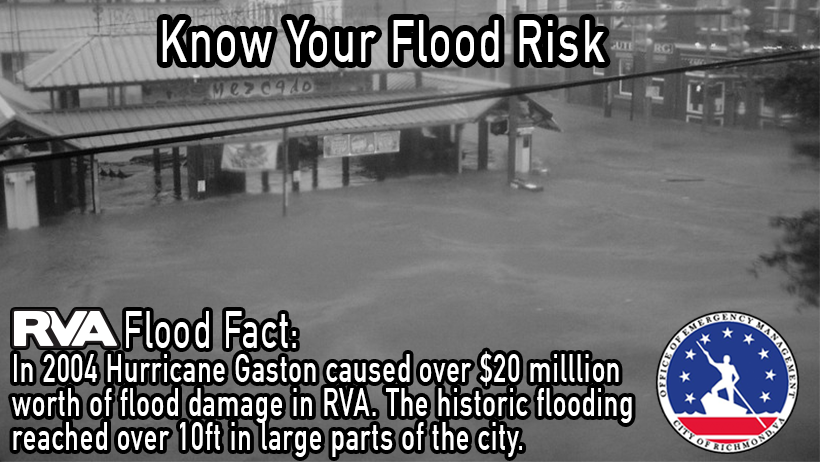
Richmond has a rich history on the water and underwater. It wasn’t all that long ago that Hurricane Gaston (2004) inundated downtown Richmond with flooding up to 10ft in many areas, causing over $20 million in damages. This was even after the construction of the Richmond Flood Protection System (flood wall) which was built after the historic 1972 flooding caused by Hurricane Agnes. Even well-prepared communities can suffer from floods, it can happen almost anywhere. Living behind a flood wall or in an area not considered to be a flood plain does not mean you’re immune from risk.  As recently as February of 2018, flood waters rose so high that the RVA Flood Wall had to be closed to mitigate flood risk. Even the most prepared cities can fall victim to a flood disaster. It is your responsibility to know your risk, stay informed, and be prepared!

/Users/gabelugom/Desktop/RVA OEM/Flood Stuff/Knowyourrisk.png

What You Need to Know About Floods

  • Flooding can happen in many parts of all 50 states and during any time of the year
  • You should take extra steps to be prepared if you live in a low-lying area near a body of water or downstream from a dam or levee.
  • Flooding can occur in several ways
    • Rivers cannot contain excessive rain, or the rain cannot be fully absorbed into the ground
    • Waterways are blocked, or water containment systems fail
    • Strong storm systems cause storm surges pushing water inland
  • The speed and duration of flooding can vary, it can occur very quickly (flash floods) or it can occur slowly as rain falls over many days.
  • It is important to understand your flood risks. Talk to your insurance agent about flood insurance, as standard insurance policies do NOT cover flood damage.
  • Have an evacuation plan. If you live in a low-lying area that may be at risk for flooding you should know where you’ll go during an evacuation.
  • Have an emergency kit with three days of essential supplies, medication, and important documents
  • Know how to stay informed! There are several ways you can stay informed of weather emergencies in your area.
    • Download a weather app on your phone and check weather frequently to be aware of hazardous weather before it happens
    • Purchase a NOAA Weather Radio to receive weather alerts at home
    • Sign up for alerts from the National Weather Service and Richmond’s Code Red Emergency Alert System
    • Tune in to WRIR 97.3 FM during an emergency for official information

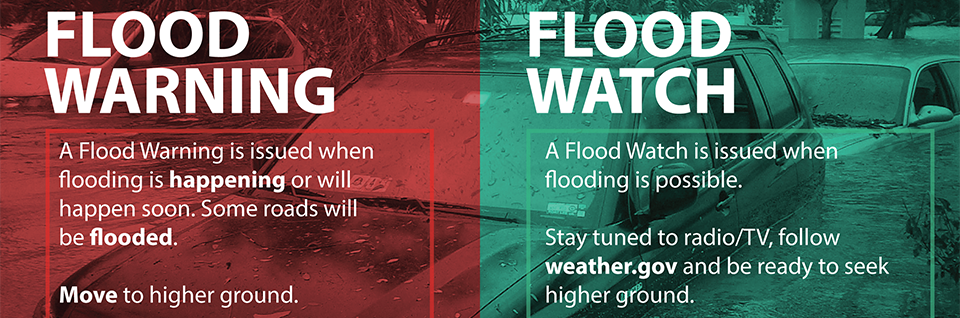
Know the difference between a flood watch and flood warning!
/Users/gabelugom/Desktop/flood_watch_vs_warning_2017_slide.png

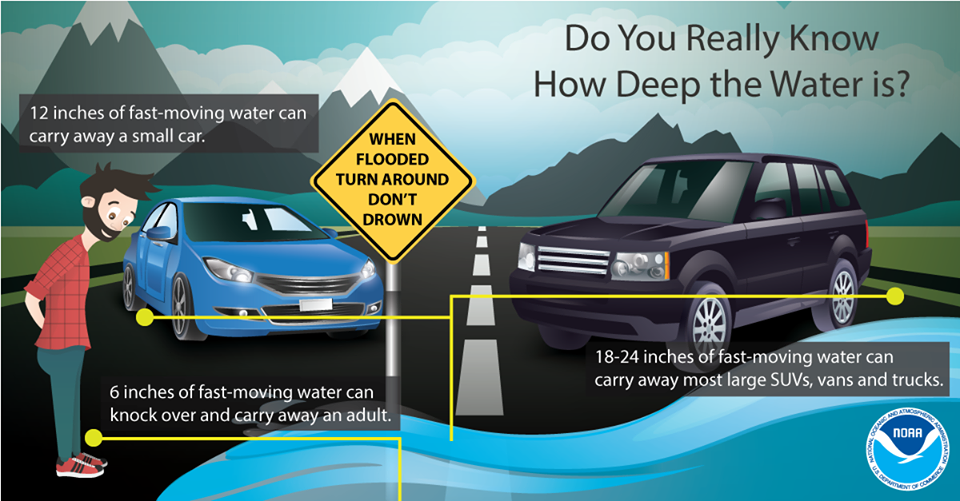
Turn Around, Don’t Drown!
/Users/gabelugom/Desktop/Flooding.png

Learn More about Flood Safety:


Tornado Awareness

Like floods, tornadoes can happen anywhere and during any time of the year. Tornadoes do NOT avoid cities, they don’t avoid anything in their path. While Virginia isn’t part of “Tornado Alley” they are still a frequent occurrence in our state. In 2004 there were 87 recorded tornadoes in Virginia, in 2017 there were 25. Being prepared for tornadoes is your responsibility, but we have some tips for you.

Tornado that recently hit Manila (RADYO INQUIRER FILE PHOTO/PHOTO GRAB FROM KAREN MADRIGAL)

Stay informed!
There are several ways you can find out about tornadoes in your area


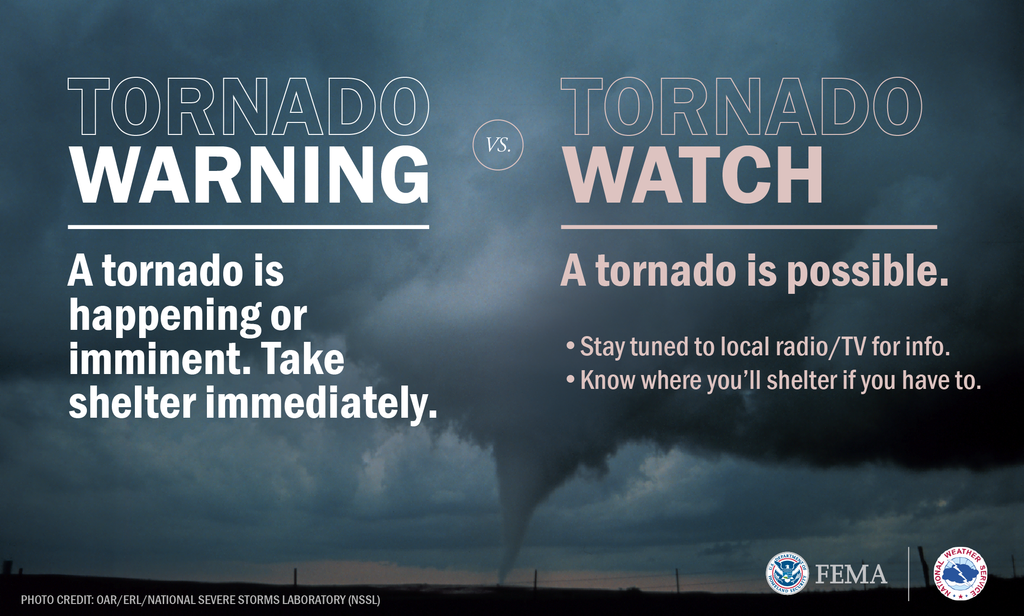
Know the difference between a Tornado Watch and a Tornado Warning
Tornado with stormy blue-grey sky. Text reads: Tornado Warning: A tornado is happening or imminent. Take shelter immediately. vs. Tornado Watch: A tornado is possible. Stay tuned to local radio/TV for info. Know where you'll shelter if you have to. Footer includes FEMA logo and NWS logo. Photo credit: OAR/ERL/National Severe Storms Laboratory (NSSL)


Know How to Stay Safe During a Tornado:
    • Identify safe rooms at home, at school, and at work so you know where to take shelter. These rooms should be on the lowest level of the building and as far away from windows and exterior walls as possible. Get down low and protect your head.
    • If you’re in a vehicle, buckle your seatbelt and keep your head down with your head covered. Do not try to seek shelter under a bridge.
    • If you’re not in a vehicle or building, seek shelter in a ditch. Lie down and cover your head.
    • Stay sheltered until the all-clear is given by your local officials


Learn More About Tornado Safety:

Tuesday, October 24, 2017

Hurricane Season is not over yet!

Hurricane Sandy impacted the USA at the end of October 5 years ago. Please be aware that hurricane season doesn't end until November 30. To stay prepared (or begin preparing), you should build an emergency kit and make a family communications plan.
  • Listen to NOAA Weather Radio or to commercial radio or television newscasts for the latest information. In any emergency, always listen to the instructions given by local emergency management officials.
  • Be alert to changing weather conditions. Look for approaching storms.
  • Look for the following danger signs:
    • Dark, often greenish sky
    • Large hail
    • A large, dark, low-lying cloud (particularly if rotating)
    • Loud roar, similar to a freight train.
    • If you see approaching storms or any of the danger signs, be prepared to take shelter immediately.
Tornado Facts
Quick facts you should know about tornadoes:
  • They may strike quickly, with little or no warning.
  • They may appear nearly transparent until dust and debris are picked up or a cloud forms in the funnel.
  • The average tornado moves Southwest to Northeast, but tornadoes have been known to move in any direction.
  • The average forward speed of a tornado is 30 mph, but may vary from stationary to 70 mph.
  • Tornadoes can accompany tropical storms and hurricanes as they move onto land.
  • Waterspouts are tornadoes that form over water.
  • Tornadoes are most frequently reported east of the Rocky Mountains during spring and summer months.
  • Peak tornado season in the southern states is March through May; in the northern states, it is late spring through early summer.
  • Tornadoes are most likely to occur between 3 pm and 9 pm, but can occur at any time.
Know the Terms
Familiarize yourself with these terms to help identify a tornado hazard:
Tornado Watch - Tornadoes are possible. Remain alert for approaching storms. Watch the sky and stay tuned to NOAA Weather Radio, commercial radio or television for information.
Tornado Warning - A tornado has been sighted or indicated by weather radar. Take shelter immediately.


  • Know where to go. If you are ordered to evacuate, know the local hurricane evacuation route(s) to take and have a plan for where you can stay. Contact your local emergency management agency for more information.
  • Put together a disaster supply kit, including a flashlight, batteries, cash, first aid supplies, and copies of your critical information if you need to evacuate
  • If you are not in an area that is advised to evacuate and you decide to stay in your home, plan for adequate supplies in case you lose power and water for several days and you are not able to leave due to flooding or blocked roads.
  • Make a family emergency communication plan.
  • Many communities have text or email alerting systems for emergency notifications.To find out what alerts are available in your area, search the Internet with your town, city, or county name and the word “alerts.”


Hurricane watch = conditions possible within the next 48 hrs.
Steps to take:
Hurricane warning = conditions are expected within 36 hrs.
Steps to take:
  • Follow evacuation orders from local officials, if given.
  • Check-in with family and friends by texting or using social media.
  • Follow the hurricane timeline preparedness checklist, depending on when the storm is anticipated to hit and the impact that is projected for your location.
  • Know your hurricane risk. Talk to your local emergency management agency.
  • Make an emergency plan.
  • Build or restock your basic disaster supplies kit, including food and water, a flashlight, batteries, chargers, cash, and first aid supplies.
  • Consider buying flood insurance.
  • Familiarize yourself with local emergency plans. Know where to go and how to get there should you need to get to higher ground or to evacuate.
  • Stay tuned to local wireless emergency alerts, TV, or radio for weather updates, emergency instructions, or evacuation orders.


Tuesday, May 9, 2017

Hurricane Season Starts June 1st

Atlantic hurricane season is from June 1 to November 30 every year.


While hurricanes can develop anytime, it is during the late summer months into the fall that hurricanes are most likely to effect the east coast. The National Oceanic and Atmospheric Administration(NOAA) is forecasting 4 hurricanes this season which includes 1-2 storms classified as major. While this season is predicted to be below average it only takes one hurricane to devastate a community. It is important to remember hurricanes result in power outages from damaging winds and falling trees. For inland communities like Richmond, flooding is the biggest threat. Richmond has adopted strategies to lessen the impact of rising river water and localized flooding but it is equally important to understand the responsibilities of residents.

  Pay attention to the forecasts, hurricanes change strength and direction frequently resulting in often changing areas of impact. Remember that hurricanes don’t have to make a direct hit for communities to experience heavy rains and damaging winds. Understand the risk of flooding at your home and work including your daily commute and consider learning alternative routes.

  For more information on hurricanes go to NOAA’s Tropical Cyclone Guide: http://www.nws.noaa.gov/os/hurricane/resources/TropicalCyclones11.pdf 

Watch this video from the National Hurricane Center on Inland Flooding: https://www.youtube.com/watch?v=omJoz2u3rZI


Post Gaston 2004 Shockoe Bottom

Thursday, June 2, 2016

2016 Hurricane Season

It’s June 2nd and though the skies may be clear now and the seas calm, June 1st is the official start of hurricane season, the start of six months of keeping one eye on the weather at all times. Hurricane season extends from June 1st to November 30th each year. The likelihood of Richmond experiencing a hurricane grows to a peak in the late summer months of August and into September. Advances in technology allow meteorologists to predict with greater accuracy the projected path and severity of these massive storms. Hurricanes that make landfall and impact the Richmond metro area may not be as strong as when they hit the coast but can still bring heavy rains, flooding, strong winds, and even tornados. In addition to the potential flooding, this impact can still cause significant damage to include large numbers downed trees resulting in massive long term power outages and damage to homes and other property.

The 2016 Atlantic Hurricane season is expected to be the most active since 2012. The National Oceanic and Atmospheric Administration’s (NOAA) outlook called for a near normal season with 10-16 named storms, with four to eight hurricanes and one to four “major” ones with winds reaching 111 mph and up. The long term season averages are 12 named storms, with six hurricanes and three major ones. Learn more: http://www.noaa.gov/

Now is the time to:

  • • Review plans and procedures including response and individual agency emergency action plans and continuity of operations (COOP) plans
  • • Check critical equipment and supplies
  • • Backup critical data and address how to protect vital records
  • • What critical resources will you need to maintain a service level

Additionally, here are some tips to provide to family, friends and neighbors:

  • • Build an emergency kit for 72 hours with water, food, flashlight, battery-powered radio, first aid kit, medications, copies of important papers, extra cash among other items
  • • Talk with members of your household about an evacuation plan and practice it before an emergency
  • • Be informed
  • • Learn more: http://www.readyvirginia.gov/

Remember it only takes one! So let’s ensure our departments as well as families are ready this hurricane season. The Central Virginia Emergency Management Alliance is hosting Survivor Day at multiple locations in Central Virginia to help citizens prepare. For more information and to sign up, please follow this link: http://www.survivorday.com/home.php

Friday, May 20, 2016

Hurricane Preparedness Day 6 - Get a Plan!

During a hurricane Richmond residents will likely be told to shelter in place rather than evacuate, unless you live in a low lying area near the James River.  Sheltering in place and avoid traveling during the storm is advised.  Having a plan to shelter in place and a family communication plan is critical to being prepared.  Often major storms can impact or overwhelm communications infrastructure, making it difficult to call and communicate to your loved ones locally.  Consider identifying a friend or relative out of town that family members can call and check in with to report their safety and well being.  Oftentimes it is easier to make a call out of the impacted area than it is to make calls locally.  Also consider having a plan to be self sufficient at home for 72 hours or 3 days without electricity. 

Watch this video from the National Hurricane Center on planning for hurricane season:


Thursday, May 19, 2016

Hurricane Preparedness Day 5 - After the Forecast

 Forecasts are what local emergency managers rely on, the accuracy and detail matter a great deal to the decisions made at the local level.  For hurricanes, advancements in technology allows forecasters to predict where the storm will make landfall and what intensity.   Once the storm begins approaching and the path is becoming more defined, watches and warnings will be issued for the impacted areas.  Local Emergency Management Offices begin monitoring the information soon after these storms form.  Coordination occurs with the Virginia Department of Emergency Management and neighboring emergency management organizations.  Once it is apparent that the storm will impact the Richmond area, the City takes steps to mitigate potential issues as well as notify residents of what to expect and how to prepare for their families.  Widespread power outages are expected with large storms such as hurricanes, and preparedness is centered on what you would need to shelter in place for three days with no electricity.  With any storm it is important to follow local forecasts and be aware of the expected or potential impact.  Follow instructions given by local officials on how to protect yourself and your family.  

Watch this video from the National Hurricane Center on forecasting hurricanes:


Wednesday, May 18, 2016

Hurricane Preparedness Day 4 - Inland Flooding

Flooding is the most common hazard for the City of Richmond, and can happen as the result of many types of weather events.  Overland flooding occurs when a waterway such as the James River overflows its banks.  Flash flooding occurs within a few minutes of heavy rainfall and often comes with little to no warning time.  Localized flooding can occur as a result from drainage of storm water and exists on a much smaller scale than flash and overland. 


All types of flooding should be taken seriously.  Never underestimate the potential damage or harm that a flood can cause.  A foot of water can float most vehicles so avoid driving through flooded roadways.  Also do not walk through flood waters as they often contain harmful chemicals or debris that could potentially cause injury.  

Check out this video from the National Hurricane Center on Inland Flooding:


Try these flood risk scenarios for more on your risk for experiencing a flood and visit www.ready.gov/floods for more information on how to prepare. 

Tuesday, May 17, 2016

Hurricane Preparedness Day 3 - Wind

Wind damage can result from a variety of significant weather events not just hurricanes.  Strong winds are a characteristic of tornadoes, severe thunderstorms, and nor’easters making wind damage a year round risk for the Richmond area.  During a storm that has the potential for strong winds it is important to remember how to stay safe:
  •  If  indoors, move away from windows and go to the your buildings lowest level
  •  If outdoors, seek shelter immediately
  • If in a mobile home, leave and take shelter in a sturdier building
  • If driving, pull of the road away from trees and utility poles which have the potential to fall


Also, don’t attempt to move downed power lines and report them to the power company.  Take precaution removing any downed trees from your property and seek professional assistance if able.  Check out this video from the National Hurricane Center to learn more about wind damage:


Monday, May 16, 2016

Hurricane Preparedness Day 2 - Storm Surge

Today’s theme for Hurricane Preparedness Week is Storm Surge.  While storm surge does not impact Richmond, it does impact the coastal and tidewater areas of the state where many people vacation during the summer months which coincides with hurricane season.  Check out this video from NOAA on Storm Surge: 


Even though Richmond does not face the potential harm of storm surge, flooding is an issue with the proximity to the James River.  The tidal portion of the James River begins in Richmond and Wednesday's preparedness theme will address inland flooding so make sure you check back to find out about more about this hazard.  

Sunday, May 15, 2016

Kick Off to Hurricane Preparedness Week


Today starts the week long National Hurricane Preparedness Campaign. Each day will feature a different topic ending May 21st. The start of Hurricane season on June 1st and we want Richmond to be prepared!   The first day of Hurricane Preparedness Week starts with the basics of hurricanes, watch this video from the National Hurricane Center:


Do you know what you need to be prepared for hurricane season?  Consider starting by making a supply kit.  What items would your family need to shelter in place for 72 hours with no electricity?  Food and water are likely the first and very basic needs to stock.  Stocking non-perishable nutritious foods and one gallon of potable water per person per day for 3 days will be a great way to start building an emergency supply kit.  Start by adding a few extra grocery items each trip, by doing this will lessen the financial burden.  Additionally, remember that even non-perishable food and water have expiration dates so remember to check your kit regularly and replace items as needed. 

Other items to include in your emergency supply kit

  • Battery-powered or hand crank radio and a NOAA Weather Radio with tone alert and extra batteries for both
  • Flashlight and extra batteries
  • First aid kit
  • Whistle to signal for help
  • Dust mask to help filter contaminated air and plastic sheeting and duct tape to shelter-in-place
  • Moist towelettes, garbage bags and plastic ties for personal sanitation
  • Wrench or pliers to turn off utilities
  • Manual can opener for food
  • Local maps
  • Cell phone with chargers, inverter or solar charge

Monday, March 14, 2016

Flooding is a Year Round Hazard

April showers bring May flowers is the wisdom we are told but as we transition into spring and summer, shedding winter gear for outdoor activities and longer days, hazards also change.  No longer will our concerns be icy roads and snow accumulation, but rather our focus shifts to flooding.  Flooding can occur year round, but in the spring the risk is higher.  This is not only due to April showers, but flooding also occurs as a result of ice and snow melting at higher elevations or mountainous areas of the river.  Did you know that the James River is 348 miles long and forms in the Appalachian Mountains?  River flooding that occurs in Richmond may not be a direct result of an impact to the area, and could originate from other areas of Virginia.  This type of river flooding is referred to as overland flooding.  
Overland flooding on Riverside Drive January 2010

In addition to overland flooding, flash flooding can occur as a result of intense rainfall that occurs over a short period of time in a low lying area.  In addition to river flooding, localized flooding can occur in smaller areas as a result of storm drain blockage and development.  New development often contributes to flash flooding as new construction changes the natural drainage in an area. 

Hurricanes and tropical storms can leave an area devastated by floods.  Hurricane season for Virginia begins on June 1st and continues to November 1st of every year. 

It is important during any type of flood event to never drive through flooded roadways.  The depth of the water and the condition of the road underneath may not be noticeable.  Only six inches of water can cause most passenger cars to lose control or stall and a foot of water can float most vehicles.  Trucks and sport utility vehicles are not exceptions to this as two feet of water can carry them away.  After the storm has passed you may be tempted to walk through flood waters, but this is often dangerous as these waters can become contaminated with gasoline or raw sewage and be host to harmful debris.  

Wednesday, January 20, 2016

Winter Storm Watch

A Winter Storm Watch is in effect from 1/22/2016 7:00 AM to 1/24/2016 7:00 AM EST for the Richmond area. For more information, please visit the National Weather Service here: http://inws.wrh.noaa.gov/weather/alertinfo/28462160

Tuesday, January 5, 2016

Before Winter Weather that Impacts the Area


As the temperatures drop, always pay attention to local forecast for potential severe winter weather. Understanding forecast terminology is the first step to being prepared. 

Winter Weather Advisory: Significant winter storm or hazardous winter weather is occurring, imminent, and is an inconvenience.

Winter Storm Watch: Significant winter weather is expected but not imminent provides 12 to 36 hours’ notice of the possibility of winter weather.

Winter Storm Warning: Significant winter weather is occurring imminent or likely and is a threat to life and property.

Blizzard Warning: Dangerous winds that are at least 35 mph or greater, blowing snow that will frequently reduce visibility to 1/4 mile or less for at least three hours.

Listen to local forecast

Tune into 97.3 WRIR for the most accurate and update warning from the City of Richmond Office of Emergency Management.

Have a battery operated or hand crank radio to be able to receive warnings and notification when the power is out.

Tips to Prepare for Winter Weather

Before winter add the following supplies to your emergency kit:
  • Extra blankets and winter clothing
  • Snow shovel
  • Rock salt or other products to melt ice

In addition remember to make sure you have sufficient heating fuel and have your chimneys and heating systems checked annually. 

Remember to bring pets indoors.

Drive only if it is absolutely necessary.

Make sure your family communications plan is current, and that everyone is aware of how you will contact each other and how you will reunite.

Never use a generator, grill, camp stove, propane, natural gas or charcoal burning heating devices inside of your home, garage, basement or crawlspace.  Make sure the heating device is located away from home doors and windows. 

To prepare for any disaster, it’s important to take three simple steps: 
  • Get a kit
  • Make a Plan
  • Stay Informed

Visit: www.richmondgov.com/fire/EmergencyManagement.aspx for more information on preparing for all disasters or emergencies.

Update the emergency kit in your vehicle with:
  • Sand or cat litter
  • Blankets      
  • Shovel
  • Warm clothing
  • Windshield scraper
  • Flashlight
  • Water
  • Non perishable food
  • Road or tow chain Jumper cables
  • Emergency flares


Thursday, December 10, 2015

Winter Weather

While we are in a warm spell, remember that winter officially begins December 21st and lasts until March 19th. During these three months Richmond residents are often faced with times of severe cold which can be accompanied by winter storms that bring snow and ice. Winter Storms are often problematic because they often result in loss of power and communication, and can immobilize an entire region. It is important to be prepared to handle periods of severe cold, snow, and ice. During winter weather events consider minimizing travel on roads as most injuries and deaths are considered secondary and are usually the result of accident or injury. Take measure to prepare both at home and on the road. Consider keeping warm clothes and blankets in your vehicle and ensure your snow shovels are readily accessible in your home.

Watch this video for tips on safe winter driving
Check out this brochure for more Winter Weather Tips 
For current forecast information visit the National Weather Service

Friday, June 19, 2015

Two Year Anniversary and the 2015 Hurricane Season


Two years ago Emergency Management started distributing a monthly newsletter which soon transitioned into this blog. Realizing the need for a forum to provide preparedness tips, historical information, and current events this blog was established. To celebrate our anniversary we are sharing our very fist newsletter on Hurricane Preparedness. We have learned a lot in two years.

June Newsletter 2013

Don't forget Hurricane Season started June 1st and will last until November 30th. While the season is predicted to have below average activity, it only takes one storm to devastate a community. It is important to be prepared year round, and remember as the seasons change so do the risks. Check our webpage often as we change our Spotlight Section to reflect different threats. As always stay tuned to local forecasts when severe weather is expected to impact your area.


Monday, April 20, 2015

Potential Severe Weather - 4/20/2015

Good morning RVA –
 
Today will give the city a potential round of severe weather. Below is a brief on the storm system as well as the risk map from the Storm Prediction Center. We're located in the ‘enhanced’ risk (orange) category, and if you're wondering that entails, also below is the risk category chart that delineates out the levels of severe weather forecasted by SPC.

Advisories/Watches/Warnings: None currently. A severe thunderstorm or tornado watch may be issued at some point this afternoon.

Hazard: Potential for numerous severe storms capable of producing large hail and damaging winds; isolated tornadoes cannot be ruled out. This storm system produced 4 tornadoes, 237 high wind reports and 139 hail reports yesterday – 4/19 throughout the southeast states.

Temperature: 

o   High: 83

o   Low: 56

Timing: Expect storms between 4pm-9pm

City impact: With this storm system having a history of damaging winds and hail, and expected to impact our area today, the main concerns will be downed trees, power outages and evening rush hour traffic issues. Stay tuned to our social media accounts and for further updates, as needed, later on today. Feel free to share this blog post amongst your friends, family and neighbors.

It's important to remember that severe weather can strike at any time. Are you prepared? Visit http://www.ready.gov/severe-weather for important preparedness tips!